Sass Lighting Sass Lighting

How to Identify the Most Common Light Bulb Base Types?

Time:2026-09-30 Author:Amelia
0%

A bulb can look right on a store shelf and still refuse to fit the socket. The base is the small, easy-to-overlook detail that determines whether a lamp twists in, pins into place, or connects through a specialty fitting. What bulb base types are most commonly used? In many U.S. homes, the familiar screw bases include E26 for standard lamps and E12 for smaller candle-style fixtures. Pin bases, such as GU10, appear in some directional and recessed lights. The exact mix varies by country, fixture, and application.

Reliable identification starts with the socket, not the bulb’s appearance. Check the fixture label, measure the base, and compare its shape with the old lamp. Do not force a near-match. A few millimeters matter. A useful industry reference is the U.S. Department of Energy’s 2020 U.S. Lighting Market Characterization, which examines lighting technologies and their use across buildings. For base dimensions and designations, consult applicable ANSI/NEMA standards rather than relying on retailer photos alone.

One limitation deserves attention: without a verifiable source, I cannot responsibly attribute a direct quotation on common bulb bases to a named industry expert. That would risk inventing expertise or wording. This guide can still help readers recognize common formats and avoid a mismatched purchase, but local standards and less-common fixtures may complicate the picture. Check twice. The socket is the final test.
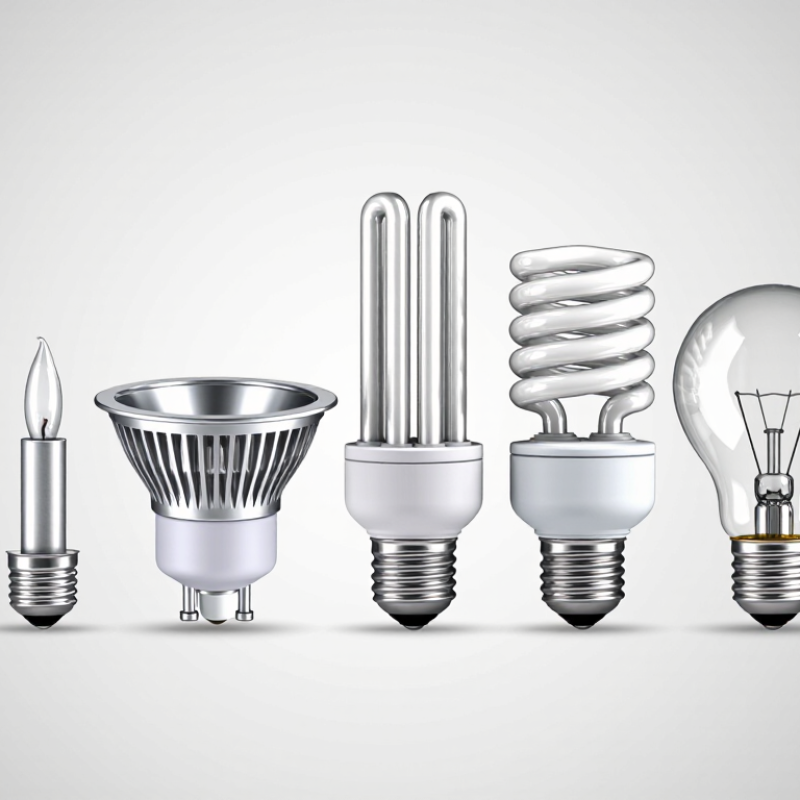
How to Identify the Most Common Light Bulb Base Types?

Understanding the Parts and Measurements of a Light Bulb Base

A light bulb base is the part that connects the bulb to a socket. It includes a metal shell or pins, an insulating section, and one or more electrical contacts. The shape matters as much as the bulb’s brightness. A bulb that looks right may still have the wrong base.

For screw bases, measure the widest part of the threaded metal section, not the glass or the base’s length. An E26 base is about 26 millimeters across; an E12 is about 12 millimeters. These numbers identify nominal sizes, so a ruler may not show an exact match. A caliper gives a steadier reading. Turn off the power and let the bulb cool before handling it.

Pin bases need a different check. Measure the distance between the centers of the pins, and note whether they are straight or have widened ends for a twist-lock connection. GU10 pins, for example, lock with a short turn, while other pin bases push straight into place. Look at the socket too. A marking on the old bulb can help, but labels fade, and similar-looking bases are easy to confuse. Don’t force a bulb into a socket; compare its base and the fixture instructions before replacing it.

How to Identify the Most Common Light Bulb Base Types

Compare the nominal diameters of common Edison screw bases. The “E” stands for Edison, and the number indicates the base’s approximate diameter in millimeters. Measure across the widest part of the screw base—not the glass bulb—to help identify its type.

Preparing to Inspect a Bulb and Its Socket Safely

Before identifying a bulb base, make the area safe. Turn the lamp off and unplug it, or switch off the circuit at the breaker for a hard-wired fixture. Let the bulb cool completely; glass can stay hot longer than expected. A small flashlight helps you see the socket without touching it. Keep your hands dry.

Check that the bulb is steady before loosening it. Hold the glass gently near its base, not by the shade or a fragile globe. If it resists, stop rather than twisting harder. Once removed, inspect the socket opening for dark marks, corrosion, cracks, or a loose center contact. Do not insert tools or fingers into the socket. For a hard-wired fixture, confirm power is off with a suitable tester before looking closely. If you are unsure how to use one, ask a qualified electrician.

Now compare the bulb’s metal base with the socket shape. A screw base has visible threads; a pin base has two small pins, often spaced closely together. Look for a printed code on the bulb or fixture label, and match it to the replacement bulb’s base and voltage requirements. Labels can be worn or confusing, so pause if the details do not agree. That small delay is worthwhile. I have found that rushing this step is an easy mistake, even when the bulb looks familiar.

Recognizing Common Screw, Pin, and Twist-Lock Bases

Light bulb bases are easier to identify when you inspect the socket and the bulb together. Switch off the fixture and let the bulb cool before removing it. Look at the base, not just the glass shape. A small ruler can help you compare its width and pin spacing. Check the fixture label too; it may list the required base code.

Screw bases have a rounded metal shell with a threaded edge. They turn into a matching socket, much like a small jar lid. Common sizes include medium and candelabra bases, but appearance alone can be misleading. Measure the base diameter or read the code printed on the bulb. Do not force a bulb that resists turning. The threads may not match.

Pin bases use two or more metal pins that push into openings in the socket. Some pins sit close together; others are farther apart, so measure the spacing. Twist-lock bases, such as GU10-style fittings, also have pins, but those pins usually enter slots and lock after a short turn. Feel the difference. If the bulb will not seat smoothly, stop and check its markings and the fixture instructions. I still double-check twist-lock fittings, because their short turn can be easy to mistake for a screw base.

Comparing Base Shape and Size with Socket Specifications

Comparing base shape and size with socket specifications is more reliable than matching bulbs by appearance. ANSI C81.61 defines standardized lamp-base dimensions: E26 screw bases are nominally 26 millimeters wide, while E12 bases are 12 millimeters. Pin bases use different measurements; GU10 pins are 10 millimeters apart, and GU5.3 pins are 5.3 millimeters apart. Check the marking on the socket, then compare the bulb’s base type and dimensions. Looks can deceive. The U.S. Department of Energy’s 2020 U.S. Lighting Market Characterization estimated that LEDs represented 47% of installed lighting stock, so older sockets remain common alongside newer lamps.

Shape is only part of the fit. Match the socket’s rated voltage and maximum wattage to the bulb, and check whether the fixture has enough room around it. A screw base should seat firmly without force; a pin base should align with its slots before twisting or pushing. IEC 60061 provides standardized dimensions for lamp caps and holders, useful when checking less familiar fittings. I still recheck socket labels, because faded printing and worn contacts can mislead. Measure twice. A bulb that physically fits may still be unsuitable for a sealed or dimmable fixture.

How to Identify the Most Common Light Bulb Base Types? — Comparing Base Shape and Size with Socket Specifications
Base Type Shape and Nominal Size Matching Socket Specification Common Applications How to Identify It
E26 Edison screw; approximately 26 mm thread diameter. Socket labeled E26, with a matching screw thread and center contact. Common household lighting in North America. A medium-size metal screw base. Measure across the outside of the threaded section.
E27 Edison screw; approximately 27 mm thread diameter. Socket labeled E27, with a matching screw thread and center contact. Common general-purpose lighting in many countries using 220–240 V mains. Looks similar to E26 but is nominally 1 mm larger in diameter. Check the lamp and socket markings rather than assuming the types are interchangeable.
E12 Small Edison screw; approximately 12 mm thread diameter. Socket labeled E12, sized for a small screw base. Decorative lamps, chandeliers, and some night lights in North America. A narrow screw base, much smaller than E26 or E27.
E14 Small Edison screw; approximately 14 mm thread diameter. Socket labeled E14, sized for a small screw base. Small decorative and general-purpose lamps in many regions. A small screw base slightly wider than E12. Confirm the socket marking before fitting.
GU10 Two short pins with widened ends; pin centers are 10 mm apart. GU10 twist-lock socket; insert the pins and rotate to secure. Directional spotlights and recessed downlights. Look for two stubby pins with enlarged tips designed to lock into the socket after a short turn.
GU5.3 Two straight pins; pin centers are 5.3 mm apart. GU5.3 two-pin socket, often used with low-voltage lighting systems. Reflector spotlights and landscape or display lighting. The two thin pins are close together. Check the lamp’s voltage and fixture requirements as well as the pin spacing.
G9 Two loop-shaped pins; pin centers are 9 mm apart. G9 socket with contacts shaped to accept the two loops. Compact decorative fixtures and small enclosed luminaires. Identify the distinctive loop-style pins and verify the 9 mm spacing; do not confuse them with straight-pin bases.
G4 Two straight pins; pin centers are 4 mm apart. G4 two-pin socket with contacts 4 mm apart. Small capsule lamps used in compact fixtures and some low-voltage systems. The pins are very close together. Check the lamp’s voltage rating and fixture requirements before installation.
Fit check: Match the base code and dimensions to the socket label, and verify the lamp’s voltage and fixture requirements. Never force a bulb into a socket that does not fit easily.

Confirming the Correct Base Before Choosing a Replacement

How to Identify the Most Common Light Bulb Base Types?

Confirming the Correct Base Before Choosing a Replacement

The base must match the socket, not just the bulb’s shape. Turn off the power and let the bulb cool completely. Remove it carefully, then inspect the metal or plastic base. Common screw bases include E26 and E27 for standard household fixtures. Smaller lamps often use E12 bases. Measure the base diameter in millimeters when the code is unclear. A ruler can prevent an expensive mistake.

Pin bases need closer attention. GU10 bulbs have two short, wide pins that twist into place. G9 bulbs use looped pins, while MR16 lamps commonly use two thin, narrow pins. Compare the pin spacing and locking method with the empty socket. Never force a bulb into place. I have guessed from appearance before, and the result was an unusable replacement. The socket label is usually more reliable than memory.

FAQS

How should I prepare before inspecting a bulb or socket?

Turn off the lamp and unplug it. Let the bulb cool completely. Keep your hands dry. Use a small flashlight for visibility.

What should I do with a hard-wired fixture?

Switch off the circuit at the breaker. Confirm the power is off with a suitable tester. If unsure, contact a qualified electrician.

How can I remove a bulb safely?

Hold the glass gently near its base. Do not grip a fragile shade or globe. If the bulb resists, stop twisting.

What socket damage should I look for?

Check for dark marks, corrosion, cracks, or a loose center contact. Do not insert fingers or tools. Scorching needs professional attention.

How do I identify a screw base?

Look for visible metal threads. Common household sizes include E26 and E27. Smaller lamps often use E12 bases. Measure the diameter when uncertain.

How do I identify a pin base?

Compare the pins with the empty socket. GU10 types use short, wide pins with a twist lock. G9 types have looped pins. MR16 types use two thin pins.

Can bulb shape alone identify the correct replacement?

No. The base must match the socket. Check the printed code, diameter, pin spacing, and voltage. Shape can mislead.

What should I do when labels or codes seem confusing?

Pause and compare the bulb, socket, and fixture label. Photograph the old base before shopping. A ruler may prevent a costly mistake. I still find guessing tempting.

What if the replacement bulb does not fit easily?

Never force it. Stop if the base feels loose, damaged, or scorched. Seek qualified electrical advice instead. A small delay is safer.

Conclusion

Identifying a light bulb base becomes much easier when you understand its main parts and measurements. The base is the section that connects the bulb to the socket, and its shape, diameter, contact points, and locking method determine compatibility. Before inspecting a bulb or socket, switch off the power, allow the bulb to cool, and handle it carefully. Check the base for visible markings, count any pins, and measure its width if necessary.

What bulb base types are most commonly used? Screw bases are widely recognized by their threaded design, while pin bases use two or more metal pins that fit into matching openings. Twist-lock bases combine pins with a turn-to-secure mechanism. To choose a replacement, compare the new base’s shape, size, pin spacing, and connection style with the socket specifications. Confirming every detail before purchase helps prevent loose fittings, incorrect connections, and unnecessary replacements.

Amelia

Amelia

Amelia is a seasoned marketing professional with a wealth of expertise in our company’s core offerings. With an unwavering passion for driving growth and innovation, she plays a pivotal role in shaping our marketing strategies and enhancing brand visibility. A key aspect of her responsibilities......